




Understanding your skin type is one of the most important steps in building an effective skincare routine. Your skin type influences everything from cleanser selection and moisturiser choice to the suitability of treatments such as retinoids, chemical peels, skin boosters and laser resurfacing. Using products designed for the wrong skin type can lead to irritation, breakouts, excess oil production or persistent dryness. The good news is that most people can identify their skin type with a few simple observations.
The Five Main Skin Types
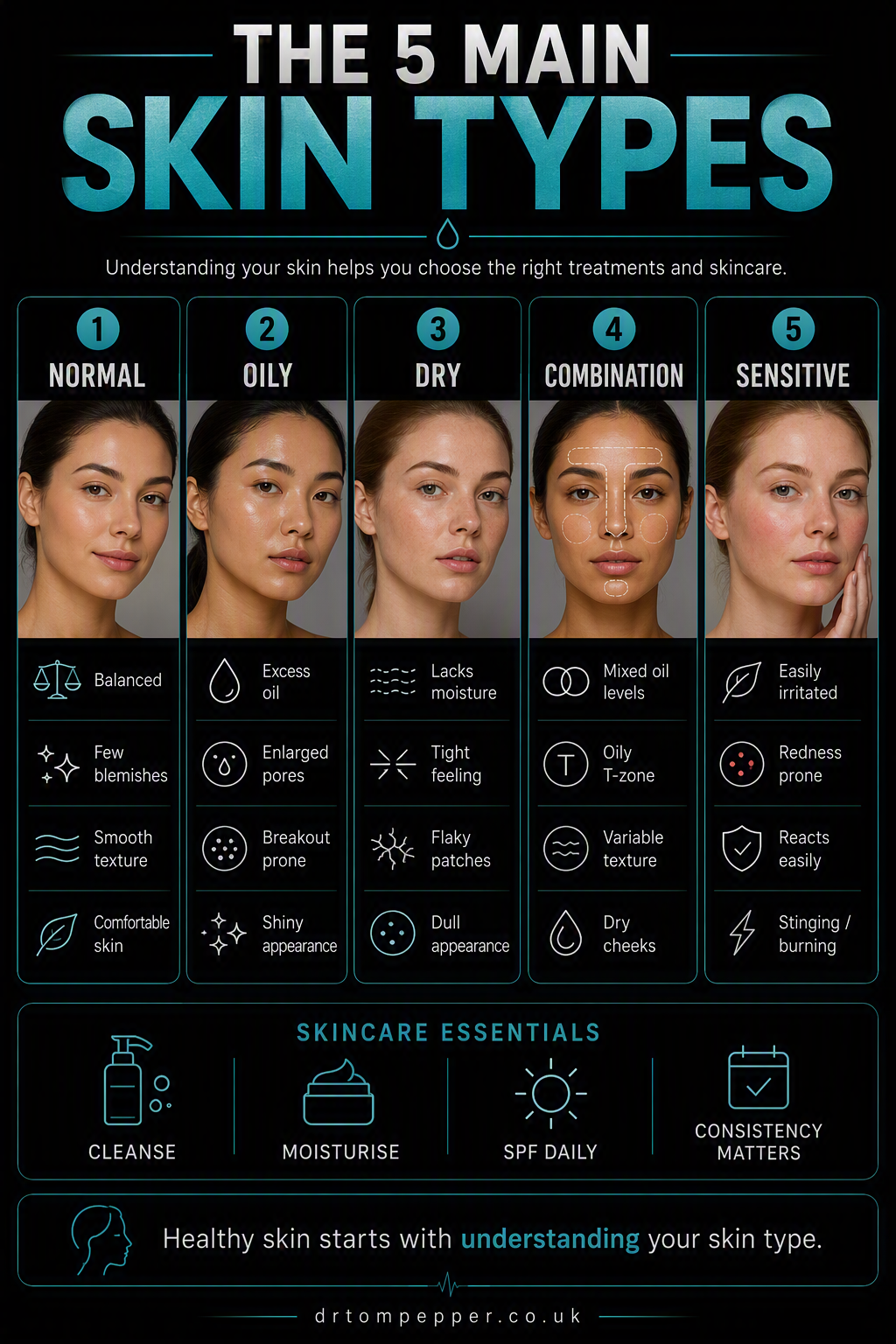
Normal Skin
Normal skin is relatively balanced. It produces enough oil to maintain a healthy skin barrier without excessive shine or dryness. Pores are typically small, breakouts are uncommon, and the skin generally feels comfortable throughout the day. This does not mean the skin is perfect. Ageing, pigmentation, and environmental damage can still occur, but the underlying skin barrier tends to function well.
Dry Skin
Dry skin produces less oil than required for optimal barrier function. It often feels tight after cleansing and may appear rough, flaky or dull. Fine lines can also become more noticeable. Many patients with dry skin assume they simply need more moisturiser. In reality, maintaining barrier function often requires a combination of gentle cleansing, moisturisation and appropriate active ingredients. Dry skin frequently benefits from careful use of retinoids, rich moisturisers, hyaluronic acid, ceramides, and skin boosters.
Oily Skin
Oily skin produces excess sebum. This commonly results in shine, enlarged pores, blackheads and a greater tendency towards acne. Although oily skin can be frustrating, it has some advantages. Excess sebum may help reduce water loss and can contribute to fewer visible fine lines in later life. Patients with oily skin often benefit from ingredients such as retinoids, niacinamide, and azelaic acid. The goal is control rather than complete elimination of oil production.
Combination Skin
Combination skin is the most common skin type. Typically, the forehead, nose and chin (the T-zone) are oily, while the cheeks are normal or dry. This creates a challenge because different areas of the face have different requirements. Many patients with combination skin benefit from a tailored approach, using lighter products in oily areas and richer formulations in drier regions.
Sensitive Skin
Sensitive skin is not always a true skin type but is often considered a category because of its clinical importance. Sensitive skin may be associated with conditions such as eczema or rosacea, and reacts more easily to products, environmental changes or cosmetic treatments. Redness, burning, stinging and irritation are common features. In these individuals, skincare routines often need to prioritise barrier repair before introducing more active ingredients.
How to Determine Your Skin Type at Home
A simple way to assess your skin type is to wash your face using a gentle cleanser and avoid applying any products. After approximately one hour, evaluate how your skin feels.
| If your skin… | You may have… |
|---|---|
| Feels comfortable and balanced | Normal skin |
| Feels tight, rough or flaky | Dry skin |
| Appears shiny throughout | Oily skin |
| Is oily on the forehead, nose and chin but drier elsewhere | Combination skin |
| Frequently becomes red, irritated or stings | Sensitive skin |
This simple test is not perfect, but it provides a useful starting point.
Dry Skin vs Dehydrated Skin
One of the most common misconceptions in skincare is that dry skin and dehydrated skin are the same thing. They are not.
Dry skin lacks oil. Dehydrated skin lacks water.
A patient with oily skin can still have dehydrated skin. Common signs of dehydration include dullness, reduced radiance, fine superficial lines and a feeling of tightness despite excess oil production. This explains why patients with oily skin sometimes benefit from treatments designed to improve hydration, such as skin boosters or hyaluronic acid-based skincare.
Skin Type vs Skin Condition
It is important to distinguish between a skin type and a skin condition. Your skin type is largely determined by genetics and tends to remain relatively stable throughout life. By contrast, skin conditions can change due to age, hormones, climate, medications and skincare products. For example, a patient with naturally oily skin may become dehydrated after excessive use of active ingredients, while someone with dry skin may also develop rosacea or sensitivity.
What Is Fitzpatrick Skin Type?
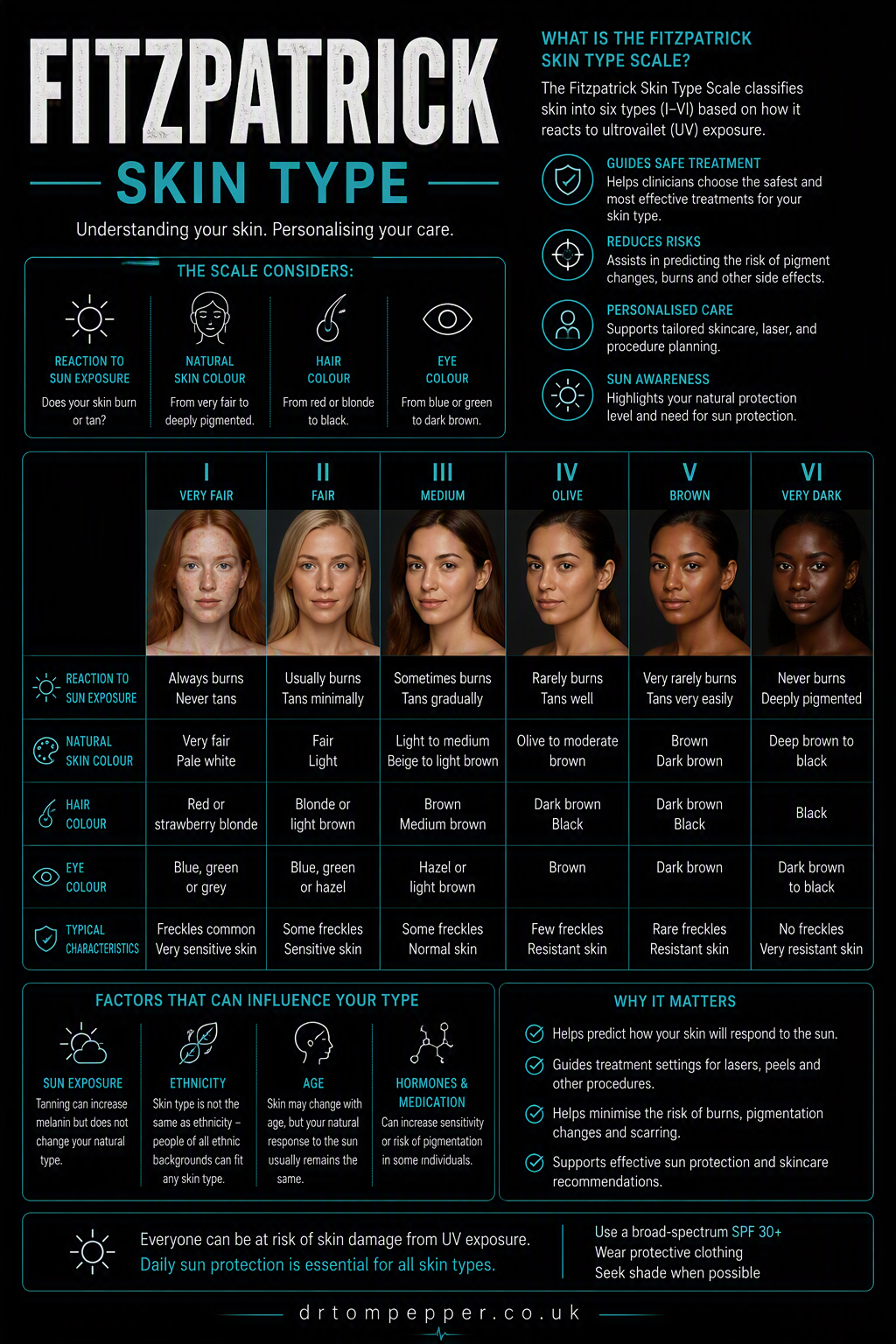
While skin type describes oil production, the Fitzpatrick skin classification describes how the skin responds to sun exposure.
This classification is particularly important when considering:
- Laser treatments
- Chemical peels
- IPL (intense pulsed light)
- Pigmentation treatments
- Skin resurfacing procedures
Fitzpatrick type helps predict the likelihood of burning, tanning and developing pigmentation changes after treatment.
Why Fitzpatrick Type Matters
Fitzpatrick skin type has little influence on whether your skin is oily or dry, but it has a major influence on treatment planning.
Patients with darker skin types can have a higher risk of:
- Post-inflammatory hyperpigmentation
- Pigmentary changes after laser treatment
- Pigmentation following chemical peels
This does not mean aesthetic treatments cannot be performed. It simply means treatment selection and settings may need to be adjusted accordingly.
What About Uneven Pigmentation?
For uneven pigmentation and melasma, topical treatments remain the cornerstone of management and commonly include hydroquinone, azelaic acid, tranexamic acid, retinoids, niacinamide and vitamin C. These ingredients help reduce melanin production, limit pigment transfer, accelerate epidermal turnover and improve overall skin tone. Consistent daily sun protection is essential, as ultraviolet exposure is one of the principal drivers of recurrent pigmentation and melasma.
The strongest topical pigment-treating agents are: hydroquinone, tranexamic acid, and azelaic acid, but important adjuncts to these include retinoids, niacinamide, and possibly vitamin C.
Skin Ageing
SSkin ageing occurs through two overlapping processes:
- Intrinsic ageing is the natural ageing process driven by genetics and time. As we age, collagen production declines, skin becomes thinner, elasticity reduces, and fine lines gradually develop.
- Extrinsic ageing, often called photoageing, results from external factors such as sun exposure, smoking, pollution and lifestyle habits. In many people, these factors contribute more to visible ageing than genetics alone.
Common signs of skin ageing include fine lines, wrinkles, uneven texture, pigmentation, enlarged pores, reduced elasticity and dullness.
Importantly, skin ageing is not the same as facial ageing. While skincare products and skin-quality treatments can improve the skin itself, deeper age-related changes also occur within the face, including volume loss, fat descent and ligament laxity. These structural changes often become increasingly important from the age of 40 onwards. The most effective way to slow premature skin ageing remains daily sun protection, supported by evidence-based treatments such as retinoids, antioxidants and selected skin-quality procedures.
Which Treatments Are Best For Different Skin Types?
Understanding your skin type helps identify which treatments may be most beneficial.
| Skin Concern | Commonly Used Treatments |
|---|---|
| Dry or dehydrated skin | Skin boosters, moisturisers, hyaluronic acid |
| Oily skin | Retinoids, salicylic acid, niacinamide |
| Sensitive skin | Barrier repair, gentle skincare, limited active ingredients |
| Dull skin | Retinoids, chemical peels, skin boosters |
| Crepey skin | Skin boosters, polynucleotides |
| Pigmentation | Topical pigment treatments, chemical peels, selected laser treatments |
| Early skin ageing | Retinoids, skin boosters, polynucleotides |
The most appropriate treatment always depends on the individual patient, their anatomy, skin type and treatment goals.
Frequently Asked Questions
What is the most common skin type?
Combination skin is generally considered the most common skin type.
How do I know if I have oily or combination skin?
If your entire face becomes shiny throughout the day, you are more likely to have oily skin. If oiliness is largely confined to the forehead, nose and chin, combination skin is more likely.
Can I have oily and dehydrated skin at the same time?
Yes. Oily skin and dehydration frequently occur together. In fact, this is one of the most common reasons patients become confused about their skin type.
What Fitzpatrick skin type am I?
Your Fitzpatrick skin type is determined by how easily your skin burns and tans following sun exposure. A consultation can help determine your Fitzpatrick classification more accurately.
does skin type change with age?
To some extent, yes. Sebum production generally declines with age, particularly after the fourth decade of life. Many people who had oily skin in their twenties discover that their skin becomes progressively drier in their forties, fifties and beyond. At the same time, age-related collagen loss, volume loss and changes in skin quality become increasingly important contributors to facial ageing. This is one reason why treatment plans often evolve over time.
Why is my skin becoming more sensitive?
Ageing, environmental exposure, overuse of active skincare ingredients and changes in skin barrier function can all contribute to increased sensitivity.
Conclusion
Understanding your skin requires two assessments: your skin type and your Fitzpatrick skin classifcation. Together, these help guide skincare choices, identify suitable aesthetic treatments and reduce the risk of complications. By understanding how your skin behaves, it becomes much easier to choose products and treatments that deliver meaningful, long-term improvements in skin health and appearance.

