




Peel Away Imperfections for Brighter, Clearer, Healthier Skin
Chemical peels are one of the most effective non-surgical skin rejuvenation treatments for improving skin texture, uneven pigmentation, acne, fine lines and overall skin quality. By applying carefully selected medical-grade peeling agents to the skin, controlled exfoliation stimulates renewal of the epidermis, revealing fresher, smoother and more even-toned skin beneath.
Dr Tom Pepper is a Consultant Oral and Maxillofacial Surgeon providing chemical peel treatments in London from clinics at Harley Street and Cromwell Hospital. Every treatment is tailored to the patient’s skin type, concerns, and aesthetic goals to achieve natural and predictable improvement.
What Is a Chemical Peel?
A chemical peel is a skin resurfacing treatment that uses carefully controlled acids to remove damaged or aged skin cells and stimulate skin renewal. The treatment can improve:
- Uneven skin tone
- Pigmentation and sun damage
- Melasma and post-inflammatory hyperpigmentation
- Dull skin
- Enlarged pores
- Mild acne and acne scarring
- Fine lines and early skin ageing
- Rough or uneven skin texture
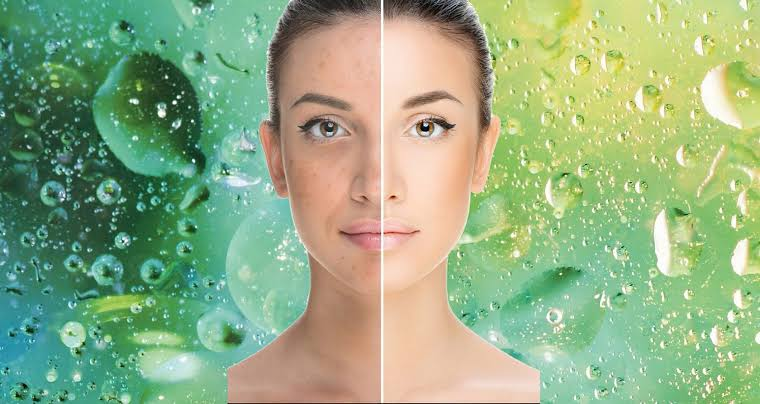
Unlike many cosmetic treatments that temporarily improve appearance, chemical peels actively encourage epidermal turnover and skin regeneration.
How Do Chemical Peels Work?
The skin naturally renews itself, but this process slows with age and sun exposure. Chemical peels accelerate this renewal process by creating controlled exfoliation of the outer layers of the skin. As the skin heals, patients often notice:
- Brighter skin
- Improved radiance
- More even pigmentation
- Smoother texture
- Reduced pore visibility
- Softer fine lines
Different peel formulations target different concerns. Some focus primarily on pigmentation and skin tone, while others are designed to improve acne, congestion or signs of ageing.
Conditions Commonly Treated with Chemical Peels
Uneven Pigmentation and Sun Damage
Chemical peels are commonly used to improve irregular pigmentation caused by sun exposure, inflammation and ageing. They can help create a more even complexion and reduce the appearance of age spots and superficial pigmentation.
Melasma
Melasma can be particularly challenging to treat. When appropriately selected, chemical peels may form part of a broader treatment programme alongside topical pigmentation treatments and strict sun protection.
Acne and Congested Skin
Certain peels can help reduce excess oil production, improve congestion and promote clearer skin by encouraging exfoliation and reducing blockage of pores.
Fine Lines and Early Skin Ageing
Chemical peels can improve skin texture and reduce the appearance of fine lines by stimulating cell turnover and improving epidermal quality.
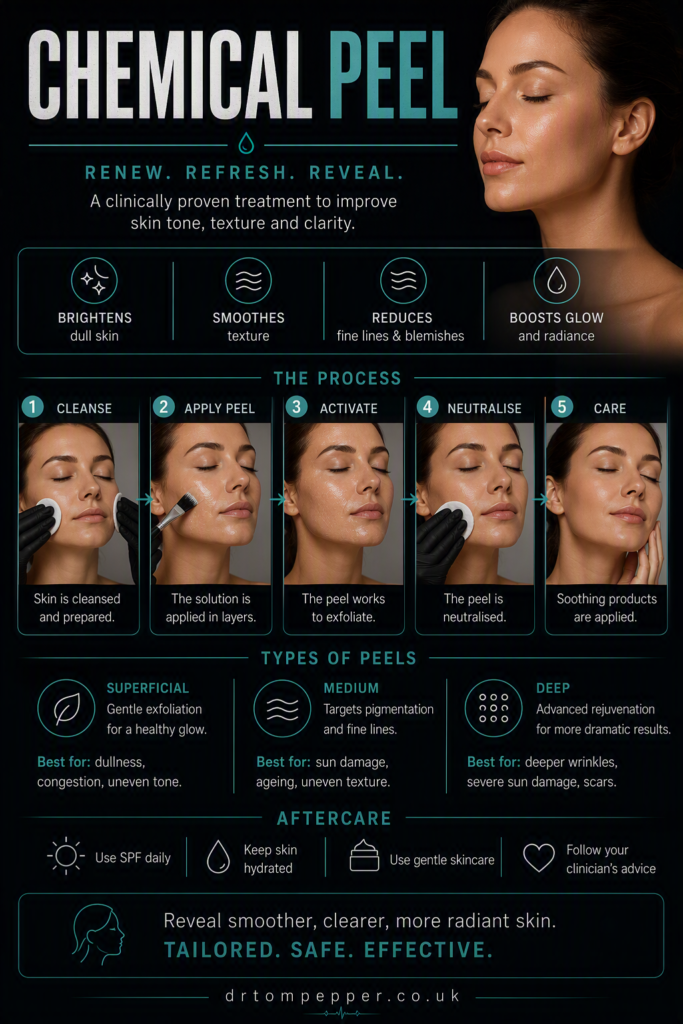
Types of Chemical Peel
Superficial Chemical Peels
Superficial peels work primarily within the outer layers of the skin and are often used to improve:
- Mild pigmentation
- Dull skin
- Acne-prone skin
- Early texture changes
These peels generally involve minimal downtime and are often performed as a course of treatments.
Medium-Depth Chemical Peels
Medium-depth peels penetrate more deeply and may offer more significant improvement for:
- Pigmentation
- Fine lines
- Sun damage
- More established skin ageing
Recovery is longer, but results are often more noticeable.
The most appropriate peel depends on the patient’s skin type, skin concerns, lifestyle and tolerance for downtime.
Why Choice of Practitioner Matters
Chemical peels may appear simple, but achieving safe, predictable results requires careful patient selection and treatment planning. As a Consultant Oral and Maxillofacial Surgeon, Dr Tom Pepper applies a detailed understanding of facial anatomy, skin behaviour, and aesthetic treatment planning to develop a personalised treatment strategy for each patient.
What Happens During Treatment?
Treatment begins with a consultation to assess skin quality, pigmentation, texture and suitability. The peel solution is then applied to the skin for a carefully controlled period. Patients commonly experience a warm or tingling sensation during treatment, which typically settles shortly afterwards. Most appointments take approximately 30 minutes.
Recovery After a Chemical Peel
Recovery depends on the depth of treatment.
- Superficial peels often cause mild dryness, redness or flaking for several days.
- Medium-depth peels may result in more visible peeling and redness for up to a week.
As the skin renews, patients often notice a brighter complexion, improved skin clarity and smoother texture. Strict sun protection is essential following treatment to minimise the risk of pigmentation changes and optimise results.
Chemical Peel vs Microneedling
Chemical peels and microneedling both improve skin quality but work differently. Chemical peels are particularly effective for:
- Pigmentation
- Uneven skin tone
- Dull skin
- Surface texture
Microneedling primarily stimulates collagen production within the dermis and is often better suited to:
- Acne scars
- Skin texture
- Fine lines
- Dermal remodelling
Many patients benefit from a combined approach as part of a comprehensive skin rejuvenation programme.
Chemical Peel vs Laser Resurfacing
Both treatments improve skin quality, but laser treatments generally penetrate deeper and can produce more dramatic results. Chemical peels are often preferred when patients want:
- Progressive improvement
- Less downtime
- Treatment of mild to moderate pigmentation
- More conservative skin resurfacing
Laser treatments may be considered where deeper resurfacing or more significant correction is required.
Frequently Asked Questions
Are chemical peels safe?
When performed appropriately following assessment of skin type and medical history, chemical peels are generally very safe. The most important factors are correct patient selection, appropriate peel choice and good aftercare.
Do chemical peels help melasma?
Chemical peels can improve melasma in selected patients, although they are usually combined with topical treatments and strict sun protection for optimal results.
How many chemical peels will I need?
Many patients benefit from a course of treatments rather than a single peel. The exact number depends on the condition being treated and the desired outcome.
Are chemical peels painful?
Most patients experience only mild discomfort, often described as tingling, warmth or a transient stinging sensation.
Can chemical peels be combined with other treatments?
Yes. Chemical peels are commonly combined with medical skincare, microneedling, skin boosters, polynucleotides and selected laser treatments depending on the treatment plan.
How long do chemical peel results last?
Results vary according to the type of peel, skin condition and skincare maintenance programme. Ongoing sun protection is essential to maintain improvement.
Book Your Consultation
Consultations for chemical peels in London are available at Harley Street and Cromwell Hospital. Patients commonly attend from Kensington, Chelsea, South Kensington, Fulham, Westminster, Notting Hill and across Greater London seeking treatment for pigmentation, acne, melasma, uneven skin tone and early skin ageing. If you are considering a chemical peel in London for pigmentation, acne, melasma, sun damage or skin rejuvenation, arrange a consultation with Dr Tom Pepper to discuss the most appropriate treatment approach for your skin type and goals.

