




Definitive Treatment for Advanced Joint Disease
Temporomandibular joint (TMJ) replacement is a surgical procedure used to treat advanced joint disease where other treatments have not been effective.
It involves replacing the damaged joint with a custom or prosthetic implant, restoring function, reducing pain, and improving quality of life.
When Joint Replacement Is Considered
TMJ joint replacement is reserved for severe or end-stage joint conditions, particularly where less invasive treatments are no longer effective.
It may be appropriate if you have:
- Advanced degenerative joint disease (osteoarthritis)
- Severe joint damage or deformity
- Persistent pain and dysfunction despite prior treatment
- Ankylosis (fusion of the joint)
- Failed previous TMJ surgery
- Significant restriction in jaw movement
This is typically considered only after other options – such as splints, injections, arthrocentesis, and arthroscopy – have been explored.
What the Procedure Involves
TMJ joint replacement is performed under general anaesthetic.
- The diseased joint is removed
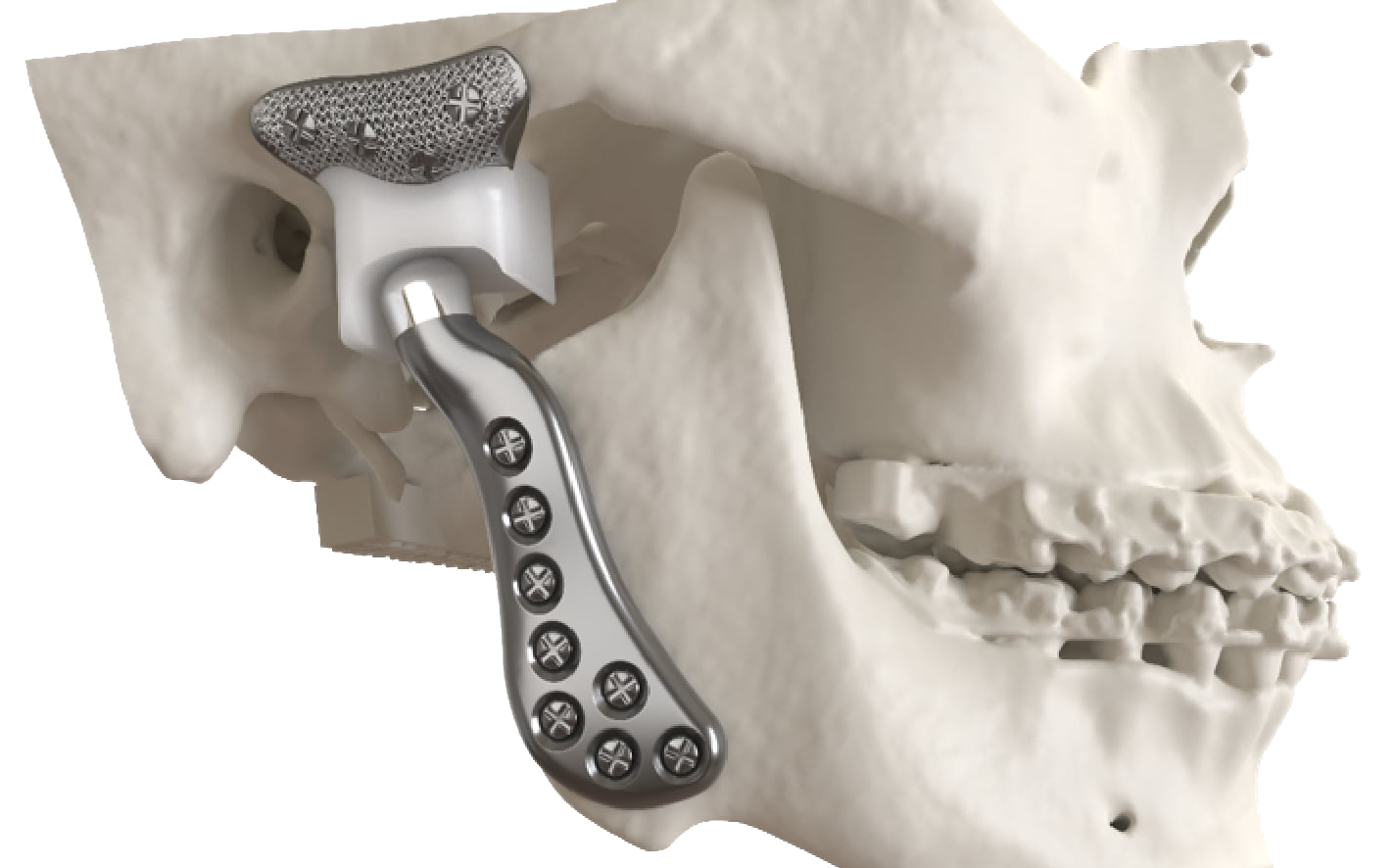
- A prosthetic joint is inserted, replacing both the joint surface and socket
- The components are fixed in a precise, pre-planned position
Implants may be stock (standardised) or custom-designed based on detailed imaging.
The aim is to restore a stable, functional joint while relieving pain.
Surgical Planning
Planning is detailed and individualised.
This includes:
- Advanced imaging (CT scans)
- Digital surgical planning
- Assessment of jaw position and occlusion
- Selection or design of the prosthesis
In some cases, joint replacement may be combined with jaw repositioning (orthognathic surgery) to optimise both function and facial balance.
Recovery
Recovery is more substantial than for minimally invasive procedures, but follows a structured pathway.
- Initial swelling and discomfort are expected
- A modified diet is required during early healing
- Physiotherapy is often necessary to restore movement
- Gradual return to normal function over several weeks
Close follow-up is essential to monitor healing and functional recovery.
Outcomes
TMJ joint replacement can provide:
- Significant reduction in pain
- Improved mouth opening
- More consistent and stable jaw function
- Relief from long-standing or refractory symptoms
Outcomes are generally favourable in carefully selected patients, particularly where there is clear structural joint disease.
Risks and Complications
As with any major surgery, there are potential risks.
These include:
- Infection
- Bleeding
- Nerve injury (affecting facial movement or sensation)
- Dislocation or mechanical issues with the prosthesis
- Persistent or recurrent symptoms
- Need for revision surgery over time
Careful planning and surgical technique are important in minimising these risks.
A Structured Treatment Pathway
Joint replacement sits at the end of a graduated approach:
- Conservative management (splints, physiotherapy, medication)
- Targeted interventions (e.g. botulinum toxin, injections)
- Minimally invasive procedures (arthrocentesis, arthroscopy)
- Open surgical procedures where required
- Joint replacement for end-stage disease
This ensures that treatment is appropriately escalated and tailored to the individual.
Consultation
A detailed consultation allows for comprehensive assessment, including imaging and evaluation of prior treatments.
This ensures a clear understanding of whether joint replacement is appropriate.
Book a Consultation
For assessment and management of advanced TMJ disorders in London, including joint replacement, arrange a consultation to discuss your case in detail.

