




How to Minimise Scarring After Facial Surgery or Injury
Scars are a normal and unavoidable part of healing following facial surgery or trauma. Although no treatment can completely prevent a scar from forming, appropriate scar management can improve the final appearance of a scar and help it become flatter, softer, less noticeable, and more comfortable.
What Is a Scar?
A scar forms when the body repairs damaged skin. During the healing process, collagen is deposited within the wound to restore strength and integrity. Initially, this collagen is immature and disorganised, which is why scars often appear red, firm, raised, or lumpy during the first few months. Over time, the scar remodels and gradually becomes less noticeable.
What Influences Scar Healing?
Every scar heals differently. The final appearance is influenced by factors including the location of the wound, the amount of tension across the skin, exposure to sunlight, skin pigmentation, infection, genetics, and overall health.
Smoking and nicotine use deserve special mention. Nicotine reduces blood flow to healing tissues and is associated with delayed wound healing and poorer scar quality. Avoiding smoking and vaping during the healing period can make a meaningful difference to the final result.
Understanding the Scar Healing Timeline
Patients are often concerned that their scar appears worse before it gets better. In reality, this is a normal part of healing.
During the first three weeks, the body’s priority is to heal the wound. Between approximately three weeks and three months, scars commonly become redder, firmer, and more noticeable. This does not indicate a problem and is often a sign that the scar is actively maturing.
Improvement then occurs gradually over many months. Most facial scars continue to soften, flatten, and fade for 12 to 18 months following surgery or injury.
Early Scar Care (First 21 Days)
During the first few weeks, wound healing is more important than scar treatment.
Keep the wound clean and follow any dressing advice provided by your clinician. Avoid picking scabs, applying make-up to unhealed wounds, or exposing the area to excessive sunlight. If non-dissolving stitches are present, attend follow-up appointments for their removal.
At this stage, the goal is uncomplicated healing rather than active scar optimisation.
Scar Care After the Skin Has Healed (21+ Days)
Once the wound has healed completely, active scar management can begin.
Scar Massage
Regular scar massage is one of the simplest and most effective treatments available. Using a plain moisturiser or silicone-based product, gently massage the scar for several minutes two to three times daily. This may help soften scar tissue, improve flexibility, and reduce feelings of tightness.
Massage should be firm enough to mobilise the scar but should not be painful.
Silicone Scar Therapy
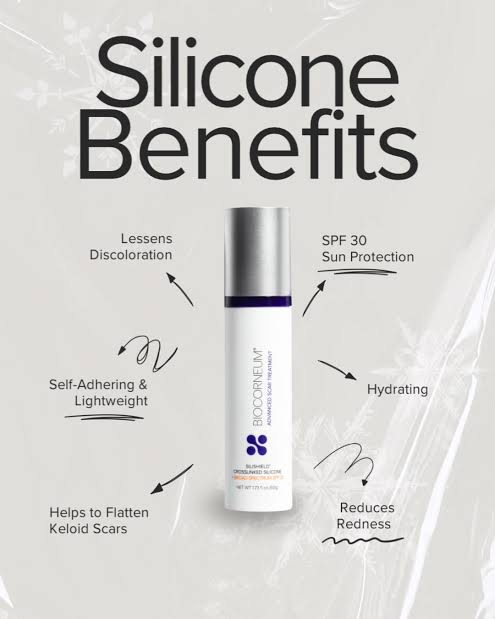
Silicone gels and silicone sheets are widely recommended and have one of the strongest evidence bases in scar management. They help maintain hydration within the scar and can reduce redness, thickness, itching, and overall scar prominence.
Commonly used products include:
- Dermatix
- Strataderm
- BioCorneum
- Kelo-Cote
These products all cost approximately £25-50. No single product has been shown to be clearly superior to the others. Kelo-Cote UV and BioCorneum SiliShield have the benefit of contaning SPF. An initial treatment period of approximately three months is recommended, although longer use may be beneficial for active or problematic scars.
How to apply silicone gel:
- Ensure the scar is clean and dry.
- Apply a thin layer across the scar, twice daily.
- Allow to dry for approximately 4-5 minutes.
- Cosmetics and sunscreen may then be applied over the top.
- If drying takes longer than 5 minutes, too much product has been applied.
Sun Protection
Sun protection is one of the most important aspects of scar care. Ultraviolet (UV) exposure can cause permanent darkening of scars, particularly during the first year after injury. This may make a scar more noticeable long-term, even if the scar is otherwise healing well.
For this reason, daily use of a broad-spectrum SPF 50 sunscreen is recommended for at least 6 to 12 months following surgery. Where possible, hats and other forms of physical sun protection should also be used.
What Is Considered Normal?
As scars heal, it is normal for them to feel firm, appear red or pink, and become slightly raised or uneven. Mild sensitivity or tenderness is common.
Because most scar improvement occurs gradually over many months, it is important not to judge the final appearance too early. A scar that appears prominent at three months may look dramatically different at one year.
Many patients experience itching as a scar matures. Mild itching is common and often reflects normal healing rather than a problem.
Regular massage, moisturisers, and silicone products often help. However, severe or persistent itching may indicate excessive scar activity and should be assessed by your clinician.
Abnormal Scarring
Occasionally, scars become excessively active.
- A hypertrophic scar is a raised scar that remains confined to the original wound. These often improve with time and may respond to treatments such as silicone therapy or steroid injections.
- A keloid scar extends beyond the original boundaries of the wound and may continue to enlarge. Keloids can be more challenging to treat. Early assessment is recommended if a scar becomes increasingly raised, itchy, painful, or continues to grow.
Advanced Scar Treatments
Where appropriate, additional treatments may be used to further improve the appearance of a scar:
- Steroid injections are commonly used for raised or thickened scars and can help reduce itch, discomfort, redness, and scar thickness.
- Microneedling can improve scar texture by stimulating collagen remodelling and is often considered once a scar has undergone several months of natural healing.
- Laser treatment may help reduce persistent redness, pigmentation abnormalities, and surface irregularities.
- Dermabrasion remains useful for selected facial scars, particularly those with contour irregularities or visible step deformities. It is usually performed once the wound has healed but before the scar has fully matured, typically between 6 weeks and 6 months after surgery.
- Surgical scar revision may be considered in some cases. This is usually reserved for scars that remain wide, visibly irregular, functionally problematic, or resistant to other treatments.
When Should You Seek Advice?
You should contact your clinician if a scar becomes increasingly red, painful, swollen, or shows signs of infection. Review is also recommended if a scar becomes progressively raised, thickened, itchy, uncomfortable, or cosmetically concerning.
Key Points
- Facial scars improve slowly and often continue to mature for 12 to 18 months.
- Silicone therapy, scar massage, and sun protection are among the most effective early treatments.
- Most scars improve significantly with time, but additional treatments such as steroid injections, laser therapy, microneedling, dermabrasion, or surgical revision may occasionally be required.
- Early assessment of problem scars often leads to the best outcomes.
Frequently Asked Questions
How long does a facial scar take to heal?
Most facial scars continue to improve for 12-18 months following surgery or injury.
What is the best treatment for surgical scars?
The best treatment depends on the scar, but most patients benefit from silicone therapy, sun protection, and scar massage. Additional treatments such as laser therapy, microneedling, dermabrasion, or scar revision may be useful in selected cases.
When should I start scar massage?
Scar massage should only begin after the wound has healed completely and has sufficient strength which, for facial scars, is usually from 21 days.
Does silicone gel really work for scars?
Yes. Silicone therapy is one of the most widely recommended evidence-based treatments for improving scar appearance and reducing redness, thickness, and itching.
Which is the best scar gel?
The active ingredient is the medical grade silicone, and there is currently no strong evidence that supports one medical-grade silicone product over another. Dermatix, Strataderm, Kelo-Cote, and BioCorneum are all effective options; the most important factor is consistent use over several months. Products with incorporated SPF are more convenient for facial scars, as these are exposed to UV light. Note that Mederma scar gel contains onion extract rather than silicone and this has a weaker evidence base than silicone-based scar therapies.

