




What Is TMJ Arthrocentesis?
TMJ arthrocentesis is a minimally invasive procedure used to treat certain jaw joint disorders that have not improved with conservative management. The procedure involves using two fine needles placed into the joint space under general anaesthetic. Sterile fluid is circulated through the joint to:
- Wash out inflammatory chemicals
- Break down small adhesions within the joint
- Improve joint movement
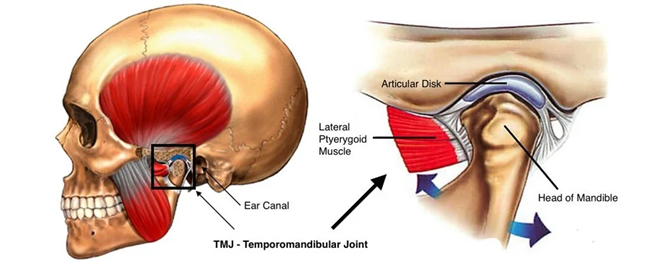
At the end of the procedure, the joint fluid is replaced by either:
- A lubricant such as hyaluronic acid (Ostenil®), or
- Platelet-rich plasma (PRP), prepared from a sample of your own blood taken whilst you are asleep
When arthrocentesis (joint wash-out) is performed, in some circumstances arthroscopy – insertion of a small camera into the joint – is also recommended to gather additional diagnostic information.
Why Might Arthrocentesis Be Recommended?
Arthrocentesis may be recommended for persistent jaw pain, restricted mouth opening, joint locking (including closed lock), and inflammatory or internal derangement of the joint. It is most effective for joint‑based rather than muscle‑only problems, but is often combined with botulinum toxin injection if there is a combined joint- and muscle-origin to symptoms.
Anaesthesia and Setting
Most procedures are performed as a day-case under general anaesthetic, allowing you to return home on the same day.
Expected Benefits and Success Rates
The purpose of the procedure is to reduce pain, improve jaw movement, and restore more normal joint function, rather than completely eliminate symptoms, and studies report this in approximately 70–80% of appropriately selected patients. Improvement may begin within 1-2 weeks but often continues for several months. Symptom relief can last for years, although some patients require repeat or alternative treatment.
What to Expect After the Procedure
Mild swelling, bruising, and temporary discomfort around the joint are common and usually resolve within a few days. You may be advised to continue jaw exercises, physiotherapy, splint use, or medication as part of your overall treatment plan.
Risks and Complications
All surgical procedures carry risks. Most complications following TMJ arthrocentesis or arthroscopy are temporary and resolve without long-term problems.
Common
- Pain, swelling, bruising, and stiffness around the joint
- Temporary worsening of symptoms during the early recovery period
- Leakage of irrigation fluid into the surrounding soft tissues, causing temporary swelling
- Temporary changes in the way the teeth meet together
Uncommon
- Infection requiring antibiotics or further treatment
- Bleeding or bruising around the joint
- Temporary weakness of facial movement due to local anaesthetic or fluid pressure around the facial nerve
- Temporary numbness or altered sensation affecting the ear, temple, tongue, lower lip, or chin
- Failure to achieve significant improvement in symptoms
- Recurrence of symptoms requiring repeat or alternative treatment
- Inability to gain satisfactory access to the joint, preventing completion of the planned procedure
Rare
- Injury to nerves resulting in prolonged weakness, numbness, tingling, or altered sensation
- Damage to blood vessels causing bleeding, haematoma, or rarely a vascular abnormality requiring further treatment
- Injury to the ear canal or eardrum causing temporary hearing disturbance, dizziness, ringing in the ear, or blood/fluid within the middle ear
- Bleeding into the joint (haemarthrosis)
- Allergy to medications, anaesthetic agents, or dressings
- Separation of a needle or surgical instrument within the joint
Very Rare
- Persistent hearing problems
- Significant injury to the joint requiring further surgery
- Perforation of the skull base with leakage of cerebrospinal fluid (CSF)
- Serious complications requiring additional specialist treatment
Important
Most patients undergo TMJ arthrocentesis or arthroscopy without serious complications. These procedures are widely used to reduce pain, improve jaw movement, and improve overall jaw function when conservative measures have not provided sufficient benefit.
Usual Recovery
| Days 1-3 | Days 4-14 | Weeks 2-6 |
| Pain and swelling in front of the earJaw stiffnessMild bruising | Gradual improvement in jaw movementReduction in discomfortContinued healing of the joint | Maximum benefit often becomes more apparentOngoing improvement in movement and symptoms |
Regular jaw exercises are often recommended after surgery and are an important part of recovery.
Clinic Review
A review appointment is usually arranged approximately 2-3 weeks after surgery to assess your recovery and discuss further management.

