




Comfortable, Controlled Sedation for Surgical Procedures
Intravenous (IV) sedation is used to help patients feel relaxed and comfortable during shorter procedures performed under local anaesthetic.
It is particularly suitable for:
- Intraoral surgery
- Minor facial procedures (e.g.blepharoplasty)
- Patients who are anxious or prefer not to be fully aware during treatment
The aim is to provide a calm, controlled experience while maintaining safety and rapid recovery.
What IV Sedation Involves
IV sedation is administered through a small cannula placed in a vein.
- Medication is delivered gradually and titrated to effect
- You remain breathing independently
- You are relaxed, often drowsy, and may have little memory of the procedure
It sits between local anaesthetic alone and general anaesthetic, offering a balance of comfort, control, and recovery.
During the Procedure
- You are continuously monitored
- Sedation is adjusted throughout
- You remain comfortable and relaxed
- Local anaesthetic ensures the area is fully numb
The Role of Remimazolam
Midazolam has long been the standard agent for IV sedation, but its effects can be variable, with slower recovery and a tendency to linger in some patients.
This practice uses the newer sedative, remimazolam. Remimazolam belongs to the benzodiazepine class and has distinct advantages:
- Rapid onset of sedation
- Predictable depth of sedation
- Very fast recovery profile
- Reduced accumulation in the body
- Lower risk of prolonged drowsiness
Because it is rapidly broken down, its effects are:
- Easier to control during the procedure
- Quicker to wear off afterwards
This makes it particularly well suited to facial surgery procedures.
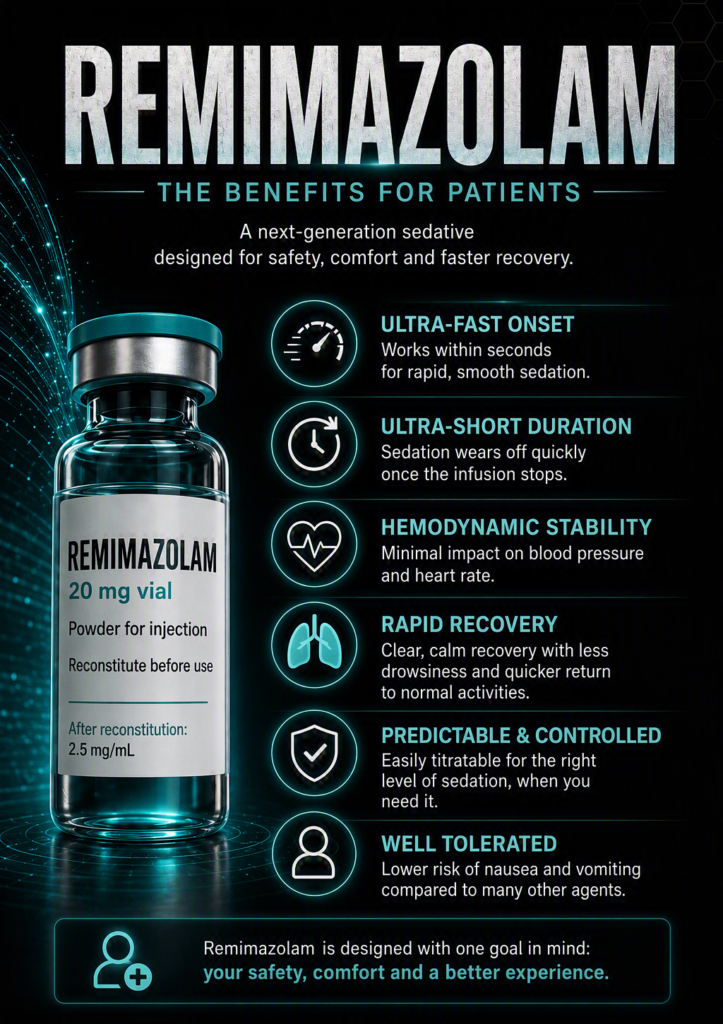
Why This Matters for Patients
Compared with older sedative agents, remimazolam provides:
- A smoother sedation experience
- Less “hangover” effect after treatment
- Faster return to normal alertness
- Greater consistency between patients
In practical terms, this means:
A procedure that feels easier to go through, with a more predictable and comfortable recovery.
Recovery
One of the key benefits of modern IV sedation is recovery.
With remimazolam:
- Recovery is typically rapid and predictable
- Most patients feel alert relatively quickly
- Discharge is usually possible the same day
You will still need:
- Someone to accompany you home
- A short period of rest afterwards
Safety
IV sedation is delivered in a controlled environment with:
- Continuous monitoring of vital signs
- Trained staff throughout the procedure
- Careful dosing tailored to the individual
Remimazolam also has an additional safety feature:
- Its effects can be reversed if required, providing an extra margin of control
Suitability
IV sedation may be appropriate if you:
- Are anxious about procedures
- Prefer not to be fully aware during treatment
- Are undergoing procedures that may be uncomfortable under local anaesthetic alone
A full assessment is carried out beforehand to ensure that sedation is safe and appropriate for you.
Risks and Considerations
IV sedation is generally safe, but potential risks include:
- Temporary drowsiness
- Reduced awareness during recovery
- Minor discomfort at the cannula site
- Rarely, over-sedation (closely monitored and controlled)
Careful monitoring and modern agents such as remimazolam reduce these risks.
Consultation
A consultation allows discussion of your procedure and whether IV sedation is appropriate for you.
Book a Consultation
For procedures performed under IV sedation in London, arrange a consultation to discuss your options and plan your treatment.

