




Custom-Made Solutions for Severe Bone Loss
Subperiosteal implants (also known as additively manufacutred subperiosteal jaw implants, or AMSJI) are a highly specialised solution for patients with advanced bone loss, where conventional dental implants are not feasible.
Modern systems use digital planning and 3D printing to create a custom-made implant framework that sits on top of the jawbone, providing support for fixed teeth.
When Subperiosteal Implants Are Considered
Subperiosteal implants are used in carefully selected cases, including:
- Severe jaw atrophy where bone volume is insufficient for implants
- Patients unsuitable for or wishing to avoid extensive bone grafting
- Failed previous implant or grafting procedures
- Complex full-arch rehabilitation cases
They are typically considered when:
Conventional implants and even advanced techniques such as zygomatic implants are not ideal or feasible.
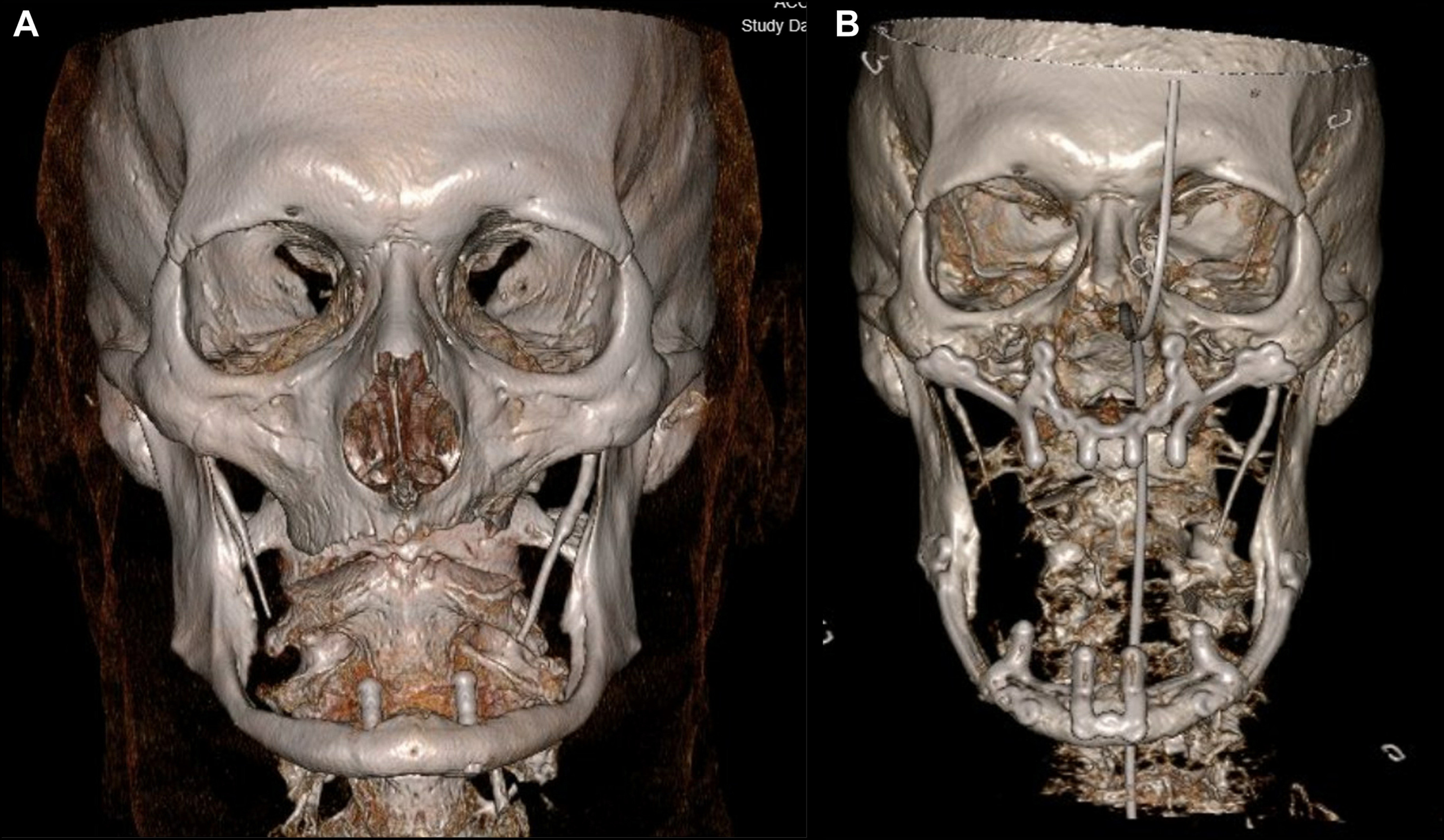
Example of a previously treated patient.
How Subperiosteal Implants Work
Unlike traditional implants placed into bone:
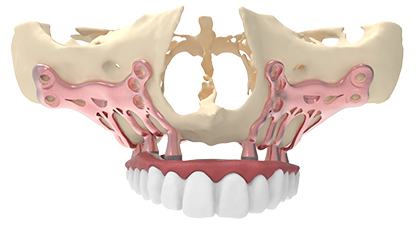
- The implant is designed to sit on top of the jawbone (subperiosteal)
- A custom titanium framework is created based on CT imaging
- The framework conforms precisely to your individual anatomy
It is then secured in position, allowing it to:
- Provide stable support for fixed dental prostheses
- Distribute forces across the jaw
- Function without the need for bone integration in the traditional sense
The Contemporary Approach
Modern subperiosteal implants differ significantly from older designs.
AMSJI systems use:
- High-resolution CT-based planning
- Digital design and simulation
- 3D printing of custom titanium frameworks
This allows:
- Precise anatomical fit
- Improved stability
- Reduced risk of historical complications associated with earlier techniques
Advantages of Subperiosteal Implants
In selected patients, subperiosteal implants can:
- Avoid extensive bone grafting procedures
- Reduce overall treatment time
- Provide a single-stage reconstructive solution
- Allow restoration of fixed teeth in otherwise challenging cases
This can be particularly beneficial in patients who:
- Prefer to avoid multi-stage reconstructive surgery
- Have limited bone available for alternative implant systems
The Procedure
Subperiosteal implant placement is typically performed under general anaesthetic.
- The custom implant is positioned over the jawbone
- It is secured in place according to the surgical plan
- Components are brought through the gum to support the prosthesis
Because the implant is pre-designed, surgery is:
- Planned in advance
- Executed with precision based on digital modelling
Recovery
Recovery is similar to other advanced implant procedures.
- Swelling and discomfort settle over several weeks
- Soft tissue healing around the implant is critical
- Follow-up ensures proper integration with the surrounding tissues
Outcomes
Subperiosteal implants can provide:
- Stable support for fixed teeth
- Restoration of function in severe bone loss
- A solution where other approaches are not viable
Outcomes are highly dependent on:
- Careful case selection
- Precise planning and execution
Risks and Considerations
As a specialist procedure, considerations include:
- Soft tissue complications around the implant
- Infection risk if healing is compromised
- Mechanical or prosthetic issues over time
- Need for long-term maintenance
Modern design and technique reduce these risks compared to earlier generations.
Specialist Assessment and Treatment
Subperiosteal implant treatment sits at the intersection of:
- Digital planning
- Advanced implant surgery
- Full-arch reconstruction
As a dual-qualified (medical and dental) Consultant Maxillofacial Surgeon, treatment is guided by:
- Experience in managing severe bone loss and complex reconstruction
- Use of advanced imaging and custom implant design
- Careful selection between grafting, zygomatic implants, and custom solutions
- A focus on long-term function and stability, not just placement
This ensures the technique is used appropriately and selectively, where it offers a clear advantage.
Consultation
A detailed consultation allows assessment of your anatomy and discussion of advanced treatment options.
Book a Consultation
For assessment and advanced implant solutions, including subperiosteal implants (AMSJI), arrange a consultation to discuss your options in detail.

